
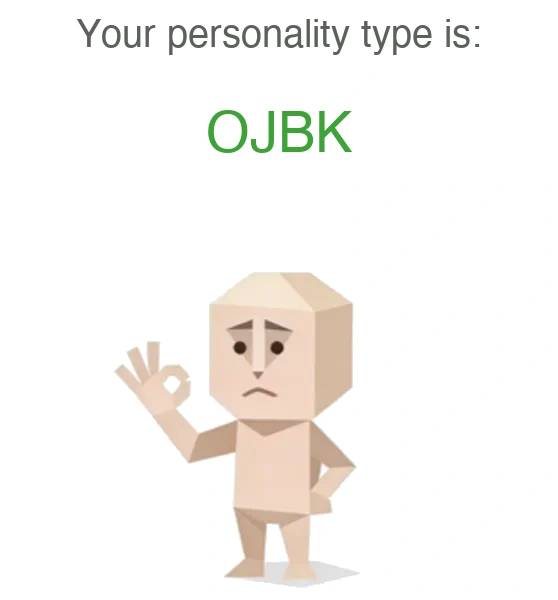
OJBK
Detached from conventional choices and social pressure. When they say they don't care, they really don't.
Strengths
- Doesn't get pulled around by other people's pace or panic
- Adapts to change quickly and without drama
- Easy to be around — rarely creates relational pressure
- Helps people loosen their grip on things that don't matter
Shadows
- "Don't want to argue" can quietly become "I give up"
- Says so little about real preferences that no one knows you
- May let go of things that were actually worth fighting for
- Looks unbothered on the surface — really just numbed-out disappointment
Profile Analysis
When you say "whatever works," people assume you're being polite. You're not. You actually don't care where you eat, who picks the place, or whether the plan changes at the last minute. It's not that you have no preferences — it's that most of what people stress about doesn't seem worth the energy.
There's a rare kind of looseness in you. The world is loud, everyone's fighting for definitions and the last word, and you're standing off to the side like you're watching a show that's trying a little too hard. You're not unobservant — you've just figured out that not every situation deserves a full emotional investment.
But "whatever" can quietly become camouflage. Over time, you get so good at stepping back, letting it go, saying it's fine, that you stop asking yourself what you actually want. On the surface it looks like peace. Underneath, sometimes it's just disappointment muted in advance.
New here?
Take the Test →At Work
You don't chase credit and you don't blow up over small things, so people see you as easy to work with. The risk: if you keep saying "either way works," people start assuming you have no stake. You do have judgment — you just don't voice it often enough for it to land.
In Relationships
Being with you is low-stress. You don't manipulate, you don't control, you don't run emotional weather systems on people. The flip side: your partner sometimes can't tell whether you actually care. If everything is "whatever," they'll never know which things genuinely aren't.
Growth Edge
Practice saying "I want this" once. You don't have to say it loudly, and you don't have to suddenly become controlling. Start small — pick the restaurant, set the time, name what you like and don't like. Indifference is one kind of freedom. Having preferences is another, and you're allowed to claim it.
Share Your Type
Let others know your SBTI personality type.
Taken the test yet? Start here.
Take the official test to find your SBTI type.